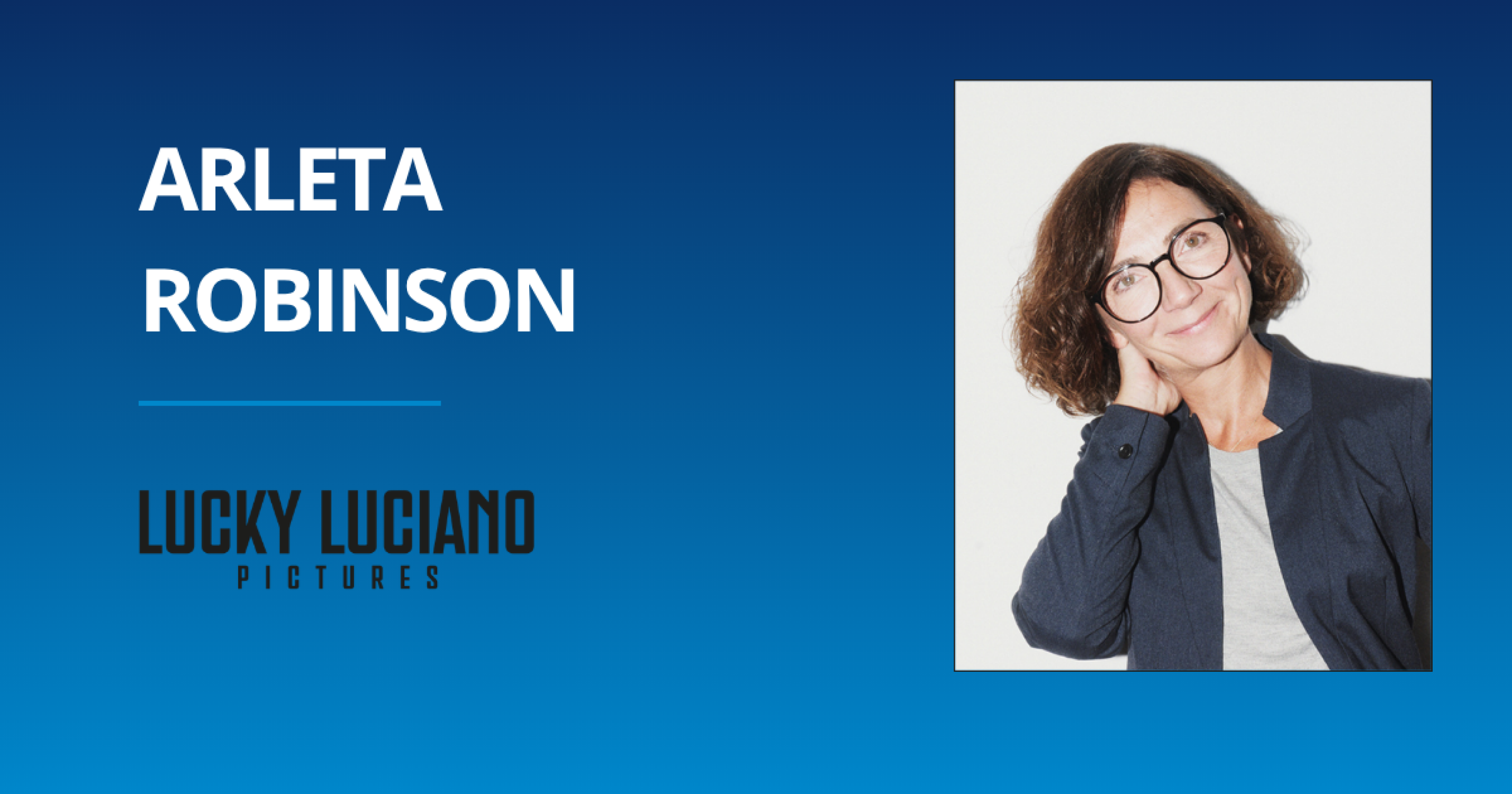
Arleta Robinson: The Producer Behind the Bigger Picture
GPN FOUNDER SPOTLIGHT - Arleta Robinson
Founder & Executive Producer, Lucky Luciano Pictures
Chairwoman, Polish Advertising Producers Association (SPR) & Board Member at European Producers Association (EPA)
I. THE GENESIS: BEFORE THE BOARDROOM
The Unlikely Route
You took what you've described as “the long road from PA to producer,” after early detours through journalism, University and lecturing. Looking back, which of those earlier, seemingly unrelated chapters do you draw on most when you're problem-solving on a tough shoot today?
Detours? I prefer to call them my training ground. Journalism taught me curiosity and communication. University lecturing - how to organise and explain complex ideas and processes. Producing television content taught me that there's no such thing as "we'll fix it tomorrow"—you solve problems now – as you face them, calmly and creatively.
Put it all together, and you get that one skill that's absolutely essential on a shoot day: creating an environment where everyone feels they own the result. When that happens, even the toughest production becomes achievable. People with different personalities, ambitions and perspectives start working towards one shared goal. Looking back, that's probably the most valuable skill I've developed over the years.
The Performer's Eye
Your father was an actor and entertainer, and you grew up around stages and performance before realising the camera wasn't for you. Does that early exposure to performance still shape how you read a room — a set, a client meeting, a negotiation — today?
Absolutely. Growing up around entertainers and stages taught me how to stay calm under pressure. A commercial production isn't all that different from a stage. Clients, agencies, directors and crews all bring their own emotions, expectations and occasionally a little drama to the picture. If the producer loses their cool, everyone feels it. But if you can rise above your own stress, navigate the occasional storm, keep sight of the bigger picture and connect people, their talents and ideas—you become the real master of the show. That’s the thrilling part of our job.
II. THE SECOND MANDATE: BUILDING AN INDUSTRY, NOT JUST A COMPANY
Wearing Two Hats
Very few producers also chair a national association. As Chairwoman of the SPR and Board Member at the European Producers Association, how do the conversations you have at a European level end up changing decisions you make back at Lucky Luciano — and does it ever work the other way round?
It actually works more from practice to policy than the other way around. Every production teaches me something about our industry: where processes could work better, where standards are missing, and where producers need stronger support. Those experiences often become the starting point for discussions within the SPR (Polish Advertising Producers Association) and the European Producers Association. At the same time, being part of the EPA gives me access to some of the sharpest minds in commercial production across Europe and the best national associations’ leaders whom I admire and respect: Steve Davies (APA), Matt Miller (IACP) and Karim Bartoletti (CPA) among many others. We exchange ideas on ethical and business standards, AI, service production, sustainability and industry best practices. It's like having a Europe-wide brainstorming sessions with people who face the same challenges every day. Amazing experience!
The Diplomat's Job
Representing Poland at the EPA means translating the realities of one national market into a pan-European conversation about standards, fair practice and the Universal Principles of Engagement. What is the hardest thing to get other European markets to understand about producing in Poland — or in Central and Eastern Europe more broadly?
That Poland is much more than a competitive budget. International clients are often pleasantly surprised by the level of craftsmanship they find here. Our crews are incredibly experienced, highly adaptable and solution-oriented. We have world-class technicians, production designers, costume departments, studio facilities and locations that can double for almost anywhere in Europe. What really defines Polish production, however, is our mindset. We are resourceful. We don't stop at identifying problems—we look for solutions. That's one of the reasons why Poland is a strong option for service production destination.
Building the Umbrella
You've spoken about wanting the SPR to become “an umbrella under which all participants can thrive.” What does that umbrella still need to grow another wing — better protection from clients, more government recognition, a younger generation of producers stepping up?
The industry has changed dramatically over the last few years. Sustainability, AI, new procurement models and changing client expectations require constant dialogue.
Our ambition at SPR is to create standards that benefit everyone—not only production companies but also agencies, advertisers, freelancers and suppliers. That's why we've developed industry recommendations, production standards, sustainability initiatives and, most recently, Poland's, and as far as I know – European first comprehensive report on AI in commercial production.
But perhaps the most important task ahead is encouraging the next generation of producers to become actively involved. Strong industries are built by communities, not individuals.
III. SUSTAINABILITY & RESPONSIBLE PRODUCTION
From Principle to Practice
You became a certified green production ambassador and brought AdGreen- and Green the Bid-style standards into your own company's workflow. Two years on, what's the single biggest myth international clients still hold about sustainable production in this part of Europe?
That sustainable production is non-existant here. The reality is quite the opposite. Many production companies in Poland have been taking sustainability seriously for years. At the SPR, we developed practical sustainability guidelines tailored to our market, and at Lucky Luciano we're proud to have been awarded a Gold Medal by EcoVadis for our sustainability and ethical business practices.
There's another myth we create ourselves—that sustainability limits creativity or makes production more complicated. In my experience, it's exactly the opposite. Responsible production makes you plan better, communicate better and waste less. It leads to smarter logistics, more thoughtful use of resources and stronger collaboration across every department. In the end, it's simply good production.
At Lucky Luciano, sustainability isn't an extra service or a box we tick. It's part of the way we work every day. My experience as a Green Production Ambassador, together with my work within the SPR and the European Producers Association, has only reinforced my belief that environmental responsibility and creative excellence are not competing priorities—they strengthen each other. The future belongs to productions that are exceptional creatively, responsible operationally and sustainable by design.
The Code of Ethics
Lucky Luciano adopted the Women in Film Association's Code of Ethics and Good Practices well before it became a market expectation. What was the conversation inside the company like when you decided to formalise that — and has it changed who wants to work with you?
For us, adopting the Code wasn't a big change—it was simply putting into words the values we'd always worked by. At Lucky Luciano, our motto is "Every Detail Matters." That doesn't apply only to the work we produce, but also to the way we work together. We believe the best creative work happens when people feel respected, safe and valued. Those human details are every bit as important as the creative ones.
The entire Lucky Luciano team embraced the Code from the very beginning because it reflects who we already are. It reassures people that there's a support system in place and encourages open conversations about professional standards, respect and accountability.
We're also seeing more clients, directors and crew members choosing partners whose culture aligns with their own values. I'm proud that Lucky Luciano is recognized not only for the quality of our productions, but also for the quality of the environment in which we create them.
IV. THE PRODUCER'S CRAFT, RECONSIDERED
The Real Skill
You've said that uniting and motivating people toward a common goal matters as much as any technical or logistical skill in this business. In an industry under pressure from shrinking budgets and faster turnarounds, is that human skill becoming rarer — or more valued?
Both. It's becoming rarer—and more valuable than ever. Technical and logistical expertise can be learned. Leadership is different. Inspiring people to commit to a shared goal takes empathy, resilience, emotional intelligence and, above all, experience.
I truly admire the energy, ambition and fresh perspective that younger generations bring to our industry. But experience teaches you something equally valuable: how to stay calm under pressure, how to negotiate, when to compromise—and when not to—and how to keep an entire production moving forward when the impossible suddenly becomes today's shooting schedule.
There's one more thing that's rarely talked about: leaders can only inspire others if they are inspired themselves. Motivation is contagious. When a leader brings optimism, confidence and purpose, that energy spreads across the entire production. And in today's fast-moving industry, that's probably the rarest—and most valuable—skill of all.
Mentors and Mirrors
Beyond the directors you've championed, who are the people — inside or outside the industry — whose way of leading or negotiating you've consciously borrowed from?
"The most important thing in communication is hearing what isn't said." That's Peter Drucker, and I love this quote. Producing is exactly that. The real challenge is rarely what's written in the brief—it's understanding the concerns, ambitions and expectations that people don't always articulate. Once you hear those, finding the right solution becomes much easier.
Then there's Brené Brown: "Clear is kind.” I've learned that honest, direct and respectful communication prevents more problems than the most detailed production schedule ever could.
Actually, I have dozens of quotes like these. I collect them like stamps. So, if GPN is ever thinking about publishing a book on producer wisdom, I might just be the right person to call.
V. THE GPN PARTNERSHIP
Why Now
Lucky Luciano has built strong relationships around the world over the past two decades. What made joining a formal global network like GPN the right next step — and what are you most excited to build together?
The industry is changing. Clients are becoming more global, productions are crossing borders more than ever, and the best solutions often come from international collaboration. That’s why joining GPN felt like a natural next step. We want more producers, agencies and brands from all over the world to discover that they can achieve world-class production quality here in Poland with us —with competitive budgets and a trusted local partner who understands every detail of the process. That's exactly what we bring to the table.