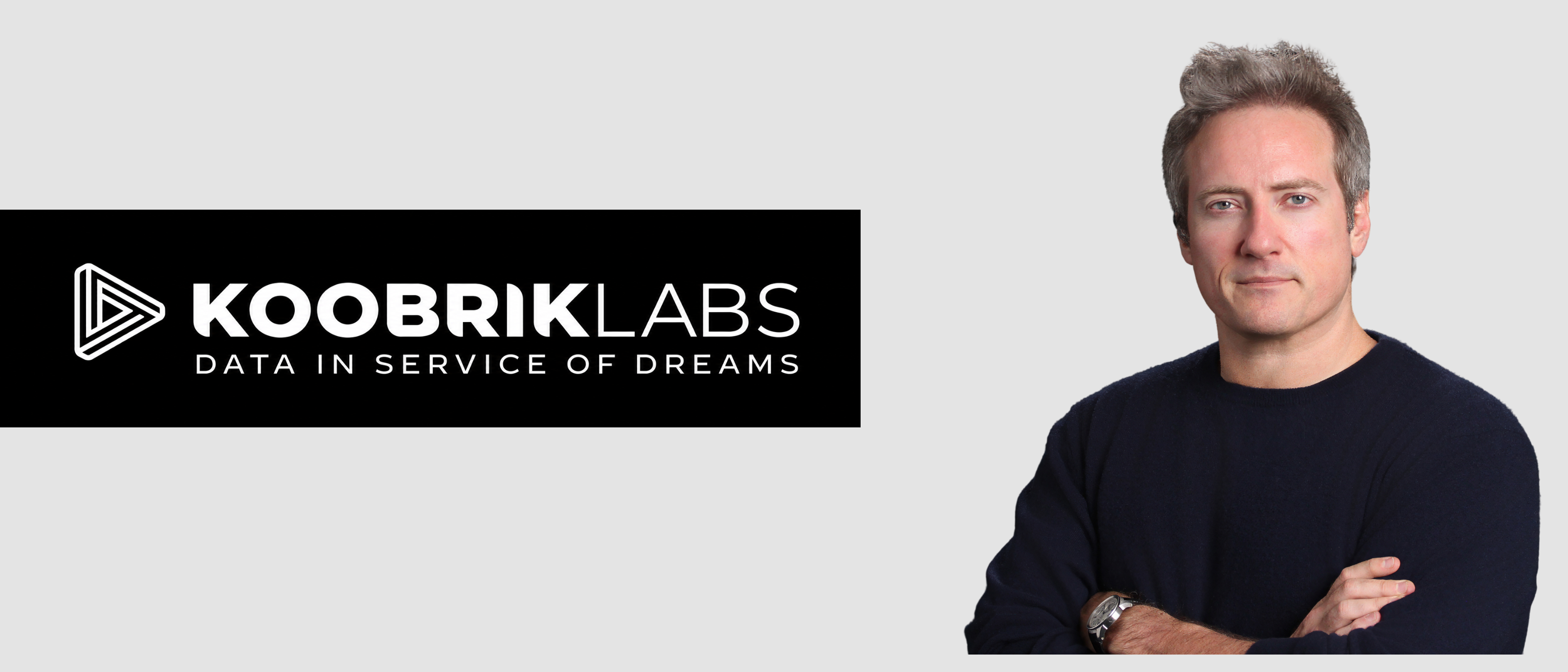
Orlando Wood The Producer Who Saw It Coming
The Problem Defines the Opportunity
Orlando Wood, Founder and CEO of GPN’s AI and technology partner, tells GPN about learning to code during a pandemic, why the people who’ve been producing beautifully for thirty years are the ones who should be holding the new tools — and why taste is the only skill that gets more valuable, not less.
Orlando Wood spent years producing at the top of the commercial industry, including running Biscuit Filmworks in the UK. Then the pandemic happened. He gained a hundred pounds, got diabetes, got gout, and learned to code from his college roommate. What came out of that was an AI company built specifically for the production world — one where the lead platform engineer once took six months off to do an off-Broadway play, and where the team waited for him to come back. Wood is not a technologist who discovered production. He’s a producer who refused to let technologists have all the fun.
GPN> The pandemic was, by your own account, not good to you. And yet that’s where this started.
Orlando> Honestly, yes. I gained a hundred pounds, I got diabetes, I got gout. Miserable. The one good thing was my best friend from college. We roomed together at Columbia — him in computer science, me in film — and during lockdown we started talking every week. He taught me to code. I was terrible at it and then slowly less terrible, and it turned out to be the most fun I had in two years.
Then he got early access to the GPT API, and he asked the right question. Not “what can this do” — what’s a pain point we could kill with it?
So we built the first AI screenplay coverage tool. Sounds trivial now. It wasn’t. A screenplay is about 70,000 tokens and the input limit back then was 2,500, so most of the work was chopping scripts into pieces and stitching the answers back together. Then we sat down with UTA. They told us they spend around two million dollars a year on coverage. We said, now you can spend a hundred thousand. That was it. After that, clients kept turning up with problems and asking if AI could solve them. That’s the whole company. The problem defines the opportunity.
GPN> You’ve talked about the difference between hiring brilliant engineers and hiring engineers who’ve actually lived in this world.
Orlando> Early on we hired very good engineers who knew nothing about screenplays or film or how a production company actually makes money. Brilliant people. Painful to work with. They didn’t understand the problem.
Now we only hire engineers who’ve lived in this world. One of our lead platform engineers was off doing an off-Broadway play for six months. We needed the role filled. We waited for him.
Every IT company looks the same. Every finance company looks the same. Every creative company is different. We need to make sure our engineers and talent are built different too.
GPN> You moved from screenplay coverage into production bidding. How did that happen?
Orlando> Managing scripts for the big studios sounds glamorous. What we actually built is a data management tool. The dataset is sexy. What sits on top of it is admin.
So I started thinking about bidding, which I did a lot of at Biscuit Filmworks. Why are we winning. Why are we losing. Who to. I used to take the British Arrows book home every year, go through who’d won, and say right, we need to work with them. Every decent executive producer does that on instinct. It can be dialled in. That’s Bid Brain. It reads where you win and where you lose and helps you win more.
GPN> Data security is the question every production company is sitting with. What’s your answer to it?
Orlando> Our industries have been the victims of the largest copyright theft of all time. I don’t accept the fair use argument, and I don’t think many people in this business do. That’s why everyone is nervous. And yet we have to use these tools, because everything is changing too fast not to. We’d just be idiots if we didn’t learn something from having been robbed.
Here’s the thing nobody wants to say out loud: it is no longer acceptable to hand your network security to the young editor downstairs on the grounds that he’s twenty-six and good with computers. We run on enterprise plans and we stand these tools up on trusted infrastructure. If you do one thing today, stop all personal AI use inside your business.
GPN> What do you offer that a production company or a tech vendor can’t?
Orlando> Translation. In a creative company, taking everyone to lunch is a legitimate way to solve a problem. So is a walk round the block. So is ping pong at three in the afternoon. In a tech company the only way is to sit at the machine until it’s fixed. Tech is closer to plumbing — and I mean that respectfully. You need both. What doesn’t work is applying one to the other. I learned that going from Wieden+Kennedy to Fallon. Same output. Completely different animal.
GPN> Where does the roadmap go from here?
Orlando> Toward margin, bluntly. You bid a job at the price the market sets. If AI takes cost out of delivering it, that difference is yours. Bid the full production, make it for less, keep the rest.
The fact is, everyone would rather make 5K than save 5K. We help with both. But saving 5K is actually better for your business — no setup costs, no change in workflow. Every company in the world has a website. Not every company is a website company.
GPN> In a room full of AI tools and automation, what’s the one skill that doesn’t get replaced?
Orlando> Taste. There was a moment where everybody was letting AI write all their code and nobody was reading it. We changed how we work because of it. Everyone has to be able to walk through what they shipped and explain it.
AI approximates experience beautifully. But anyone who actually knows what they’re doing can see what’s wrong with it in about four seconds. When everything is possible, we’ll go back to arguing about the big idea. Taste is knowing what to make, not knowing what’s makeable.
GPN> What brought you to this partnership?
Orlando> This is my community. I’m a producer by trade. It’s harder than ever to make things, and I want the people still doing it to earn more, keep their data safe, and come out of this leading rather than catching up.
Julia, mostly. We worked together closely when I was running Biscuit Filmworks in the UK. Production is about to go through the biggest shift it’s ever had. The people arriving with the new tools have never sat in a flame suite. The finance people are having a wonderful time. The technologists are solving whatever is in front of them. The people I want holding these tools are the ones who’ve been producing beautifully for thirty years, because they know what good is. I want to be led by the same people who led me. They’ll show us the way through.