
Tony Choi: A Global Production Journey from Australia to Korea
Toni Choi, Founder of Compass Production Korea, tells GPN about building a career across three continents, why he approaches every project like a marriage, and the one piece of advice from a younger director that changed how he leads.
Toni Choi didn’t plan any of it. He studied engineering. Then law. Then found himself in the film industry almost by accident, pulled in by the satisfaction of helping people and the excitement of problems that never repeat themselves. He built a career across Australia, the United States and Korea — and returned home to one of the most complex and exciting production markets in the world. He has been running Compass Production ever since, and he has been happily married for over thirty years. Both, he’ll tell you, require the same thing.
Was there a defining moment that pulled you into this industry?
It wasn’t something I deliberately planned or prepared for. My journey happened quite naturally through unexpected opportunities to help others. The appreciation I received, the satisfaction of seeing people happy with the results, and the excitement of taking on new challenges gradually shaped my career and made me who I am today.
You have an unusual background — engineering, law, and then filmmaking. How do those three worlds actually connect?
I see production as a complex equation that requires constant coordination, problem-solving, and decision-making. My background in engineering taught me analytical thinking, studying law taught me to balance different perspectives, and my hands-on experience in filmmaking taught me how to turn ideas into reality. I enjoy bringing all of these skills together — and I still approach every project with the same excitement as my very first.
You’ve built a career across Australia, the US and Korea. What did moving between those markets teach you about adapting?
That adapting to change means embracing it and finding new ways to use your strengths. My philosophy is simple: don’t fear change — be the first to change.
You describe the client relationship as something like a marriage. What do you mean by that?
Every project is a bit like a marriage. It’s about understanding each other, finding compromises, respecting boundaries, and building trust to create the best possible relationship. I’ve been happily married for over thirty years without considering divorce — so I think I know something about making it work.
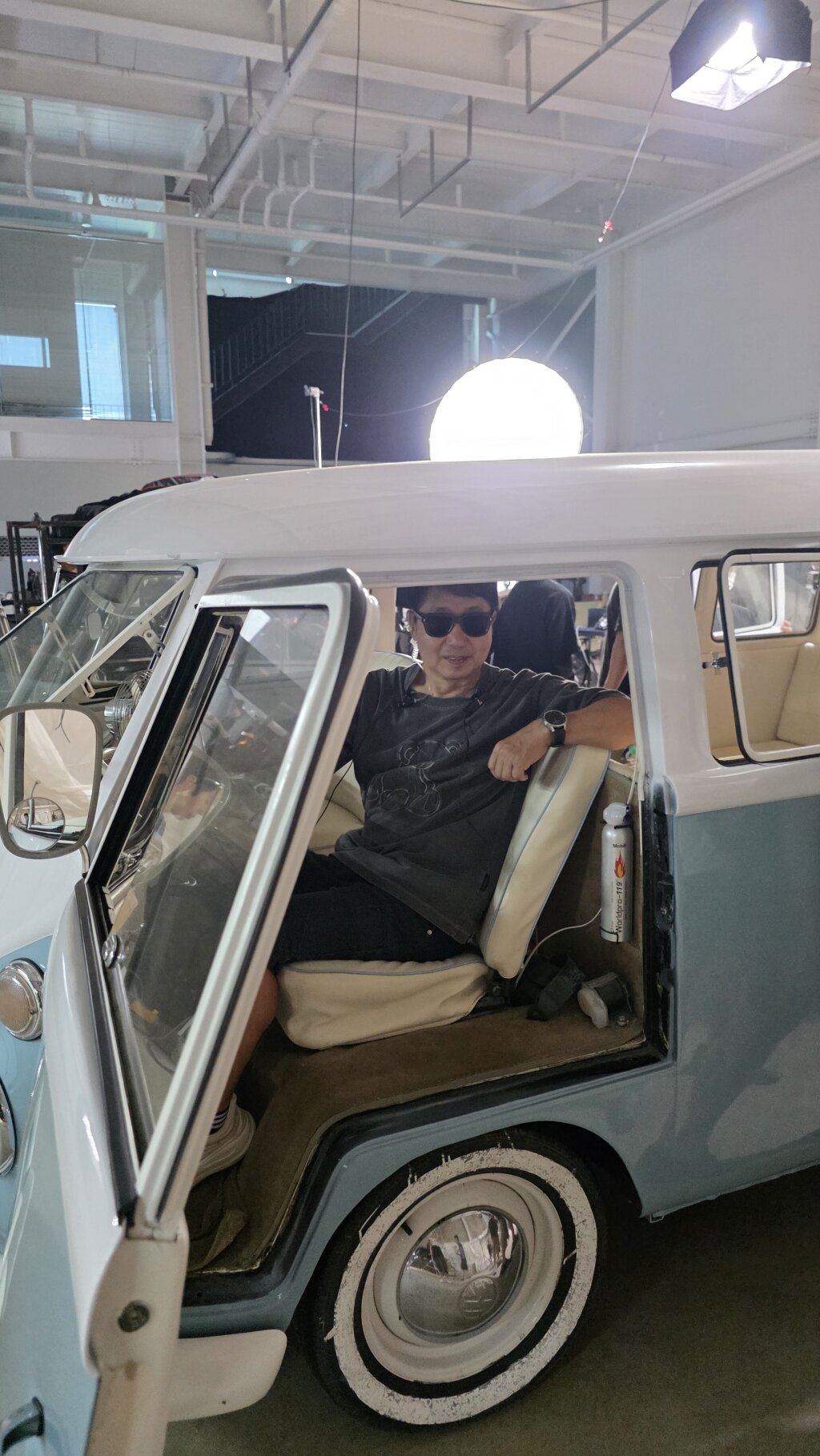
Korea is one of the most talked-about creative markets in the world right now. What do people still get wrong about producing there?
Korea is one of the world’s most exciting markets, but also one of the most unique and complex. Here, nothing is ever quite straightforward — yet even the most complicated challenges can be solved with the right understanding and approach. At Compass Production, that understanding is what we offer. Knowing how to make Korea work for our clients is what sets us apart.
How do you keep your team sharp in a market that’s moving this fast?
I always remind my team that we may be professionals at work, but we should never stop being students of the world. Past experience may make today more comfortable, but it can never guarantee tomorrow. That’s why I encourage our team to keep learning and exploring — whether through working abroad, joining different productions, or connecting with people from different backgrounds. Staying curious is how we stay ahead.
Who shaped the way you lead?
My journey has been long, so it’s difficult to name just one or two people. The film producer who first introduced me to this industry had a major influence on my career. But the piece of advice that stayed with me longest came from a younger director, during one of my toughest periods: “If you can’t avoid it, learn to enjoy it.” That simple philosophy helped me push through challenges and has greatly shaped the person and business leader I am today.